
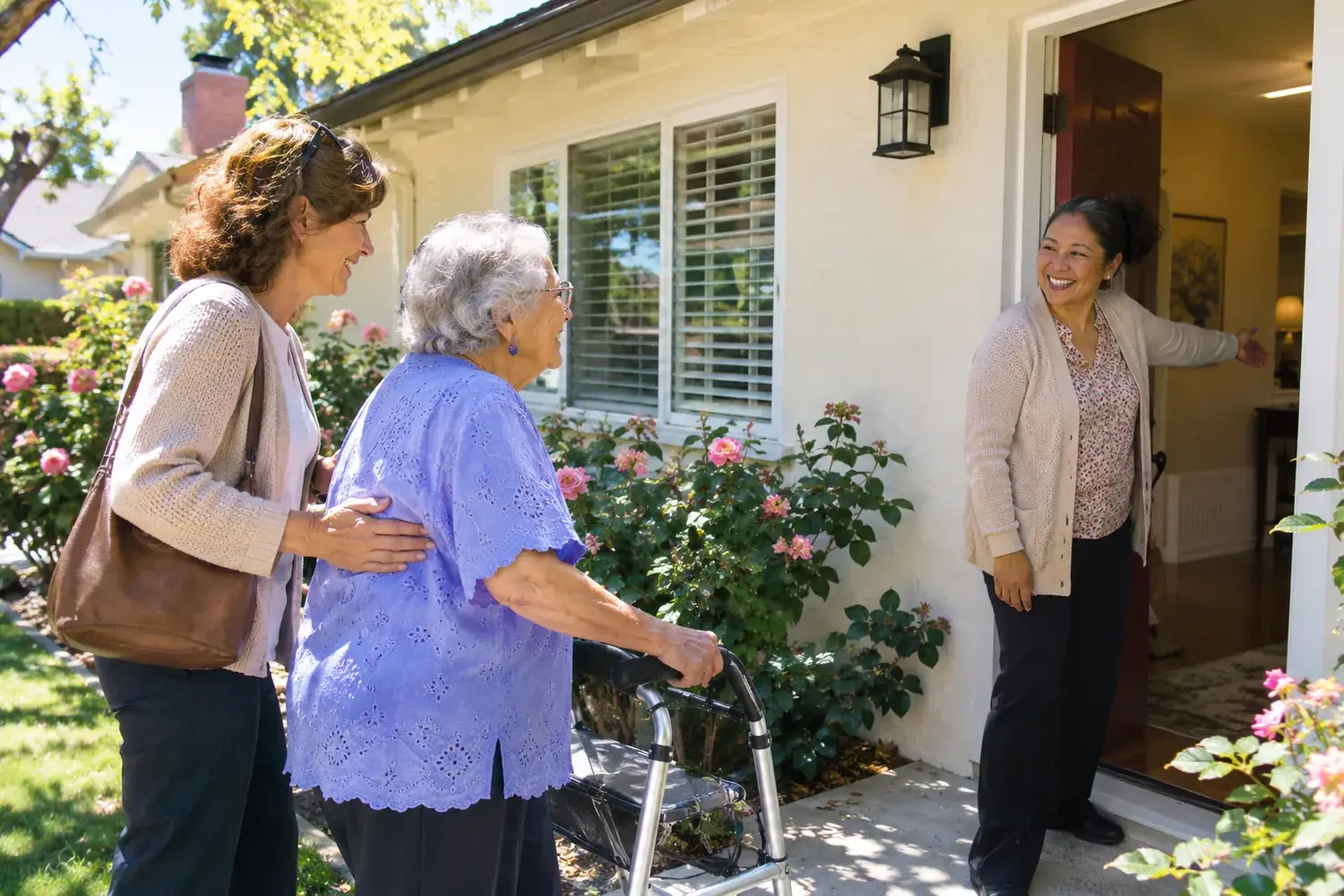
A practical senior living tour checklist covering staffing, care, costs, routines, personal preferences and what to confirm after your visit.
Not sure what comes next?
Tell us a little about your family. We’ll help you explore care options in the Bay Area.
In this guide
- Before you go
- Staffing
- Care and health
- Costs
- Daily life
- What to notice
- Memory care
- After the tour
- Make room for the person’s preferences
- Separate observations from promises
- Continue exploring
- Sources
A tour is your best chance to learn what daily life is really like. Brochures and websites show the best rooms and the best days. Go with a list, take notes, and visit at least three places so you can compare. If you can, bring a second person to notice what you miss.
Before you go
- Check the license. California licenses assisted living as a Residential Care Facility for the Elderly through the Department of Social Services, Community Care Licensing Division. Its facility search shows license status and the division handles complaints.
- If you are looking at a nursing home, read its Care Compare page and its latest inspection report first.
- Write down your relative's needs: help with bathing, medication, mobility, memory, diet, language, faith, pets.
- Ask when the community is least busy, then also plan a second, unannounced visit later.
Staffing
- How many residents does each caregiver look after on the day shift, evening and overnight?
- Are caregivers employees or from an agency? How many have left in the past year?
- Is a nurse on site, and for how many hours? Who is on call at night?
- What training do staff have for dementia care and for lifting and transfers?
Care and health
- How is care needed decided, who does the assessment, and how often is it repeated?
- What happens if needs increase? At what point would the community ask a resident to move out?
- How are medications handled, and who is told about a fall or a change in health?
- Which doctors, therapists, podiatrists or dentists visit? Can residents keep their own doctor?
- How does the community handle an emergency, and which hospital is used?
Costs
- What is the monthly base rate, and what does each level of care add? Ask for the price sheet in writing.
- Are there move-in, community or deposit fees? Are any refundable?
- How much have rates risen in the past two years, and with what notice?
- What happens when private funds run out? Does the community accept Medi-Cal in any form?
- What is the notice period and refund policy if the resident leaves?
Daily life
- Look at the weekly activity calendar. Are activities offered on weekends and evenings?
- Ask to see a menu and join a meal if possible. Can the kitchen handle special diets?
- Can residents bring their own furniture? Can they have visitors at any hour?
- What are the rules on pets, outings and transportation to appointments?
What to notice
- Do staff greet residents by name and speak to them with respect?
- Do residents look engaged, clean and comfortable, or are many sitting alone with a television?
- How do the building and rooms smell? Are the halls clear and well lit, with handrails?
- How quickly are call buttons answered? Ask a staff member, then watch.
- Are the residents you meet willing to talk with you? Ask them what they like and what they would change.
Memory care
If your relative lives with dementia, also ask how the unit prevents wandering, whether doors are secured, what the staffing ratio is for that unit, and how staff handle distress or aggression without relying on medication first.
After the tour
Write your notes straight away, while you remember. Compare the same questions across communities. Ask for the admission agreement to read at home, and consider having an elder law attorney review it. If you have concerns about a licensed facility, the Community Care Licensing Division takes complaints, and the California Long-Term Care Ombudsman program supports residents and families.
Make room for the person’s preferences
Agree the questions with the older adult beforehand. Ask how they want to participate and whether they would like time to reflect privately afterward.
Ask which everyday choices residents make themselves, how individual preferences are recorded, and what assistance is available to participate in activities. A published calendar does not explain that by itself.
Separate observations from promises
Afterward, record what you observed, what the community told you and what still needs confirmation. Ask the older adult what felt comfortable and what did not. Their answer may differ from the family’s. Follow up when an important question remains open.
Continue exploring
- What Makes a Good Day? A Search Worksheet
- Reading Senior Living Information Carefully
- How to Compare Senior Living Quotes
Talk with ERIA Cares · Explore the advice hub